Are rates really running the show in San Clemente’s luxury market? If you are watching headlines and trying to time a high‑stakes move, it can feel confusing. The truth is simple: rates change monthly payments, which changes how many buyers can play and how strong each offer feels. In this guide, you will see how that mechanism works in San Clemente, what makes coastal luxury behave differently, and smart steps you can take as a buyer or seller. Let’s dive in.
Rates, payments, and buyer power
Rates affect what matters most to buyers: the monthly payment. In the luxury tier, the dollar impact is large, so even a small rate move can shift affordability and confidence.
- Example only, principal and interest on a 30‑year fixed: on a $1,000,000 loan, a 4.0% rate is about $4,774 per month. At 5.0%, it is about $5,372. That is roughly a $600 increase for each 1% rise on a $1 million loan.
- The effect scales with loan size. A $1.5 million loan would see about a $900 change for each 1% move, and a $2 million loan about $1,200.
When payments jump, some financed buyers step back or lower their price targets. That can lengthen days on market and open the door to concessions. When rates fall, urgency returns and multiple offers become more likely. The luxury segment often moves slower than entry‑level homes, so price changes can lag rate shifts, but buyer behavior reacts quickly.
What makes San Clemente different
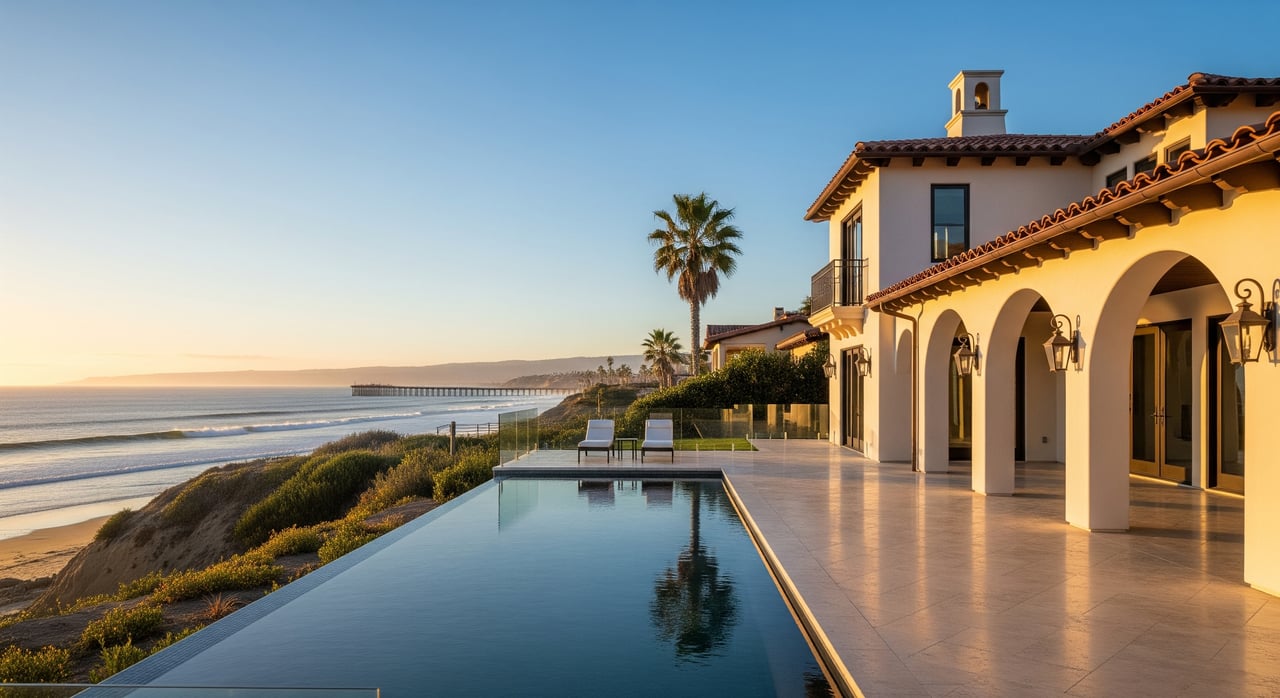
San Clemente’s luxury value rests on lifestyle and scarcity. Ocean views, proximity to beaches and parks, privacy, lot size, and updated single‑level or modernized floor plans drive demand. The buyer pool blends Orange County wealth with relocations from Los Angeles and the Bay Area, second‑home buyers, retirees, and some international interest.
Coastal supply is limited. There are few developable parcels, and zoning plus topography constrain new inventory. That scarcity supports values even when demand softens. Submarkets react differently too. Ocean‑view estates, inland tracts, and historic cottages each have their own rhythm, so pricing and time on market can vary by micro‑location and property style.
Seasonality plays a role. Spring and early summer tend to see more listings and sales. Rate changes that hit during higher‑traffic months can amplify effects, either adding fuel to momentum or tapping the brakes.
Defining luxury locally
“Luxury” is best defined relative to San Clemente’s own sales, not a round number. A practical method is to set the threshold at the top 5 to 10 percent of closed sales over the last 12 months. That gives you a data‑driven cut‑off to analyze pricing, days on market, and negotiation norms for the true upper tier.
If you are a seller, this definition clarifies who your real competition is. If you are a buyer, it shows what it takes to win at the top of the market versus the city as a whole.
Jumbo loans, cash, and underwriting realities
Most luxury purchases require jumbo financing. Jumbo loans typically carry stricter credit standards, larger reserve requirements, and more conservative underwriting than conforming loans. Timelines can be longer and documentation deeper. Higher rates can also mean lenders ask for more cash reserves.
Cash and low‑leverage buyers are more common in the luxury segment. Cash buyers are insensitive to mortgage rates, and low‑LTV buyers are less sensitive than highly leveraged buyers. In neighborhoods with a higher share of cash, rate spikes tend to have a muted effect on pricing but can still slow activity and increase the use of concessions to bridge the gap for financed buyers.
Payment scenarios you can feel
Use these simple examples to visualize how rates translate into payments. These are for illustration only and reflect principal and interest on a 30‑year fixed loan.
- $1,000,000 loan at 4.0%: about $4,774 per month P&I
- $1,000,000 loan at 5.0%: about $5,372 per month P&I
- Sensitivity: roughly $600 per month for each 1% change on a $1,000,000 loan; about $900 on a $1,500,000 loan; about $1,200 on a $2,000,000 loan
What this means in practice:
- If you are buying, your comfortable payment sets your budget. A 1% rate move can lower your max loan amount by a meaningful percentage. Planning to hold for a shorter period? You might explore an ARM structure or a permanent buydown.
- If you are selling, the pool of qualified jumbo buyers grows or shrinks with rates. Pricing, presentation, and incentives that address payment pain can widen your buyer pool and improve outcomes.
Seller playbook in higher‑rate periods
When rates are elevated or volatile, you can still command a strong result with the right strategy.
- Price to the moment. Anchor to the most recent luxury comparables and show sensitivity analysis for likely buyer financing.
- Lead with presentation. Stage thoughtfully, optimize photography and video, and highlight value drivers like views, privacy, and turnkey condition.
- Use buyer‑friendly financing tools. Offer credits for points or a rate buydown. Consider temporary buydowns for year one and two, or a permanent buydown if you expect a longer marketing window.
- Target the right audiences. Reach cash buyers and relocations with curated marketing and international distribution. Focus on timing for peak seasonal exposure when possible.
- Verify strength early. Ask for detailed pre‑approval from jumbo lenders, proof of reserves, and clarity on appraisal strategies to reduce closing risk.
Buyer playbook to control cost
If you are navigating jumbo financing, preparation creates leverage.
- Engage a jumbo lender early. Get a full pre‑approval, including reserves and documentation, so you can move quickly and negotiate with confidence.
- Ask about rate‑lock options. In a volatile market, a lock or a float‑down can protect you if rates rise during escrow.
- Compare loan structures. Some buyers use ARMs or hybrid products if they plan a shorter hold or expect to refinance later. Ask for side‑by‑side cost comparisons over your likely timeline.
- Consider buydowns and points. A seller credit toward a temporary or permanent buydown can offset higher rates and make the payment work.
- Strengthen the down payment if practical. Lower LTV can improve pricing and reduce the impact of jumbo spreads.
- Budget the full cost. Include taxes, insurance, and any local assessments so you have a complete picture of ownership costs.
Timing, seasonality, and lag
Buyer demand often reacts quickly to rate moves, while prices and inventory take longer to adjust. That lag can create windows of opportunity. In spring and early summer, more listings and buyers enter the market, so the same rate move can have an outsized effect compared with the fall.
Focus on your holding period and lifestyle goals. If you are targeting a rare ocean‑view property, waiting for the “perfect” rate can mean missing the right home. If you are flexible on location or features, you may gain by watching inventory and using concessions to bridge a short‑term rate gap.
How to keep the numbers current
Because rates and market stats change frequently, build a simple, reliable update routine:
- Track weekly mortgage rate trends. Use the Freddie Mac Primary Mortgage Market Survey for 30‑year and 15‑year averages, and request current jumbo pricing from trusted local lenders.
- Pull San Clemente MLS snapshots. Review 30‑, 90‑, and 365‑day windows for median price, active listings, days on market, and sale‑to‑list ratios. Run a report for the top 5 to 10 percent of sales to define the luxury threshold.
- Watch demand signals. Follow mortgage purchase application trends from the Mortgage Bankers Association and compare them with local pendings and new listings.
- Add regional context. Compare San Clemente to Orange County and the Anaheim‑Santa Ana‑Irvine metro to see if the city is running stronger or softer than the region.
- Confirm closing data. Use county recordings to validate final sales, especially for notable luxury transactions.
Work with a local advisor who thinks strategically
Coastal luxury demands a mix of data, presentation, and access. You want pricing counsel rooted in current jumbo realities, marketing that reaches cash and relocation buyers, and a team that can surface off‑market options before they hit the MLS. With boutique, relationship‑first service backed by the global reach of a premier luxury platform, you can protect value in any rate environment.
Ready to talk strategy or see what is coming soon? Contact Charlie Price Group to align timing, financing, and marketing around your goals.
FAQs
Will higher rates crash luxury prices in San Clemente?
- A crash is unlikely due to coastal scarcity and a higher share of cash and low‑leverage buyers, but higher rates can shrink the financed buyer pool, lengthen days on market, and increase concessions.
Should I wait for rates to fall before buying a San Clemente luxury home?
- Timing rates is risky; if your target is a rare ocean‑view or turnkey property, waiting may cost more in missed opportunities, so weigh payment comfort, hold period, and potential concessions now.
How do jumbo loan rules affect San Clemente closings?
- Jumbo loans often require stronger credit, more reserves, and thorough verification, which can extend timelines and raise the odds of financing contingencies, so verify buyer strength early.
What seller incentives help buyers when rates are high in San Clemente?
- Credits for points, temporary or permanent rate buydowns, and closing cost help can offset payment pressure and widen your buyer pool without cutting list price as much.
How do cash buyers change negotiation in San Clemente’s luxury market?
- Cash buyers are less sensitive to rates and can close faster with fewer contingencies, which can influence pricing and terms, especially for unique, high‑demand properties.
How should I define the “luxury” tier in San Clemente for pricing?
- Use the top 5 to 10 percent of closed sales over the past 12 months as the threshold to analyze pricing, days on market, and sale‑to‑list ratios for the true upper tier.