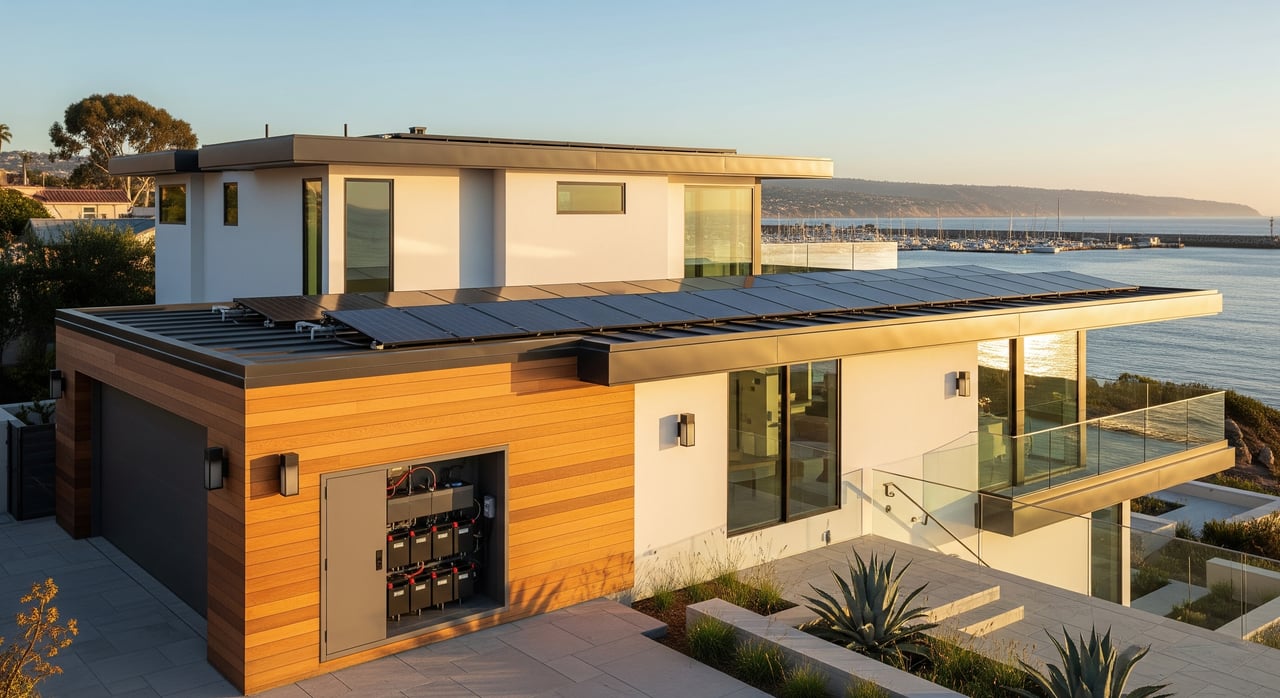
Morning fog, salty air, and ocean breezes make Dana Point special. They also shape how solar panels and home batteries perform on your roof. If you are weighing an install or prepping a coastal home for sale, you want clear guidance tailored to our marine climate. In this guide, you will learn how the marine layer affects production, which equipment holds up near salt air, how SCE’s rules influence savings, and what to expect from permits and incentives. Let’s dive in.
Why solar + battery works on the coast
Dana Point’s late spring marine layer can soften morning sun, but skies often clear by midday. That pattern means most production arrives when the sun is high, while the evening still brings higher power costs. The sweet spot is pairing solar with a battery so you store midday energy and use it during peak hours.
Under coastal “May Gray/June Gloom,” mornings can be hazy, then clear as the day warms. You can expect lower output early and stronger production in the middle of the day. Batteries bridge that gap by shifting solar to the evening when electricity is more valuable. See how the marine layer behaves seasonally.
Dana Point climate and equipment choices
Panels and hardware for salt air
Coastal air carries salt that can accelerate corrosion and leave light film on glass. Choose corrosion‑resistant hardware like stainless fasteners and racking, and use outdoor‑rated inverters or microinverters with protective coatings. Look for enclosures rated NEMA 4X when equipment must sit outside. These choices protect performance and help preserve warranties. Manufacturers recommend corrosion‑resistant designs for salt spray environments.
Plan to clean and inspect a bit more often than inland homes. A quarterly or semiannual rinse and check of rails, seals, and wiring is a practical target, adjusted to your home’s exposure and tree cover.
Battery chemistry and placement
For most homes today, lithium iron phosphate (LFP) batteries are a strong option. LFP chemistry typically offers long cycle life and a lower fire‑propagation risk compared to some nickel‑rich chemistries. Many household systems now use LFP. Recent coverage highlights LFP’s safety profile in consumer applications.
Place batteries and inverters in sheltered locations when possible, such as a garage or utility room, within manufacturer temperature and humidity limits. If equipment must be outdoors, specify NEMA 3, 4, or 4X enclosures and corrosion‑resistant conduit and fittings that stand up to coastal air. Guidance for marine‑rated electrical systems supports these choices for longevity in harsh environments. Learn more about enclosure and hardware considerations.
Permits, fire review, and safety
You will pull building and electrical permits with the City of Dana Point. Because Dana Point’s fire planning is handled by the Orange County Fire Authority (OCFA), many home systems also need OCFA review or confirmation that your plans meet their guidelines. Expect submittals that include a site plan, single‑line electrical diagram, equipment data sheets, and placards. OCFA outlines plan review and submittal practices.
Modern systems must use listed equipment and follow national standards. For energy storage, authorities commonly reference NFPA 855 and UL 9540 for listing and installation guidance, with UL 9540A used for fire testing. Residential‑size batteries often have simpler requirements but still need inspection and labeling. See UL 9540 for energy storage system safety standards.
Utility rules that shape savings
SCE service and TOU pricing
Southern California Edison provides electric service and interconnection for Dana Point homes. Most solar customers are on time‑of‑use rates that charge more in the late afternoon and evening. On SCE’s electrification plan, TOU‑D‑PRIME, the on‑peak window is typically 4 to 9 pm on weekdays. Batteries can cover much of that period with stored solar. Review SCE’s time‑of‑use plans.
Net Billing Tariff (NEM 3.0) in a nutshell
California’s current Net Billing Tariff bases export credits on hourly avoided costs, which are usually much lower than the full retail rate. That change reduced the value of sending midday power to the grid and increased the value of storing solar for evening use. SCE also offers temporary export adders for some interconnections, which decline by vintage year and expire after a set period. Read the CPUC’s overview of Net Billing.
Incentives that may apply
Federal residential clean energy credit
Federal law provides a residential clean energy tax credit for qualifying solar and battery systems. Standalone batteries that meet capacity rules are eligible under updated guidance. Rules can change, so confirm current percentages and requirements for your file year. See the latest IRS guidance.
California SGIP for batteries
California’s Self‑Generation Incentive Program (SGIP) offers incentives for residential batteries, with special equity and resiliency budgets for eligible customers. Funding levels and availability change frequently, and applications often run through approved developers. Check SGIP program details and current status.
Sizing and design tips for coastal homes
- Solar resource: Dana Point’s sun levels are solid, with monthly averages that commonly fall around 5 to 7 kWh per square meter per day, lower in winter and during late spring mornings. See local irradiance references for Dana Point.
- Battery size: Many homes choose 10 to 20 kWh to cover evening peaks and critical loads. Your exact size depends on goals like backup duration, EV charging, and cooking or HVAC loads.
- Modeling: Have your installer model hourly usage, roof tilt, shade, and battery dispatch. Tools like PVWatts or installer software help align system size with savings.
- New construction: California’s Energy Code requires solar on most new single‑family homes, and a battery can affect the performance calculations. Confirm details for the current code cycle. Learn more about the Energy Code.
Homeowner checklist
- Choose corrosion‑resistant racking, fasteners, and outdoor enclosures rated for coastal use.
- Plan a regular cleaning and inspection schedule, especially after windy, salty weeks.
- Place batteries and inverters in a garage or sheltered area when possible.
- Confirm equipment listings that align with NFPA 855 and UL 9540.
- Ask your installer to model TOU savings under TOU‑D‑PRIME and Net Billing.
- Verify SGIP incentive status and your eligibility before you finalize a contract.
- Ensure your installer handles city permits, OCFA review, and SCE interconnection.
How this can support resale
Buyers often value lower operating costs and practical resilience. A well‑documented solar array with a right‑sized battery, recent service records, and clear permits can present as a premium home feature. Make sure your agent has equipment specs, warranties, and utility bills on hand so interested buyers can understand the system at a glance.
Next steps
If you are planning upgrades or preparing to list a Dana Point property, we can help you weigh the right solar and storage choices for value, comfort, and presentation. For discreet guidance and a tailored plan, connect with the Charlie Price Group.
FAQs
Is solar plus a battery still worth it under NEM 3.0 in Dana Point?
- Under the Net Billing Tariff, export credits are lower during the day, so a battery adds value by shifting solar to evening peak hours. Savings depend on your usage, rate plan, and system size. Learn how Net Billing works.
How does the marine layer affect solar production near the ocean?
- Expect softer morning output in late spring, then stronger midday production when skies clear. System design should target midday capture and limit shading. See marine layer patterns.
What permits and fire reviews are typical for a Dana Point home battery?
- You will submit building and electrical permits and often an OCFA plan review. Install listed equipment and follow siting, labeling, and spacing requirements. Review OCFA’s process.
Which SCE rate affects battery savings the most?
- Most new solar customers use TOU‑D‑PRIME, which sets higher prices from 4 to 9 pm on weekdays. Discharging the battery during those hours can boost savings. See SCE’s TOU details.
What battery type and location work best for coastal homes?
- LFP batteries are widely used for safety and cycle life, and a garage or sheltered indoor space is preferred. If outside, specify corrosion‑resistant, properly rated enclosures. Review UL 9540 safety standards.