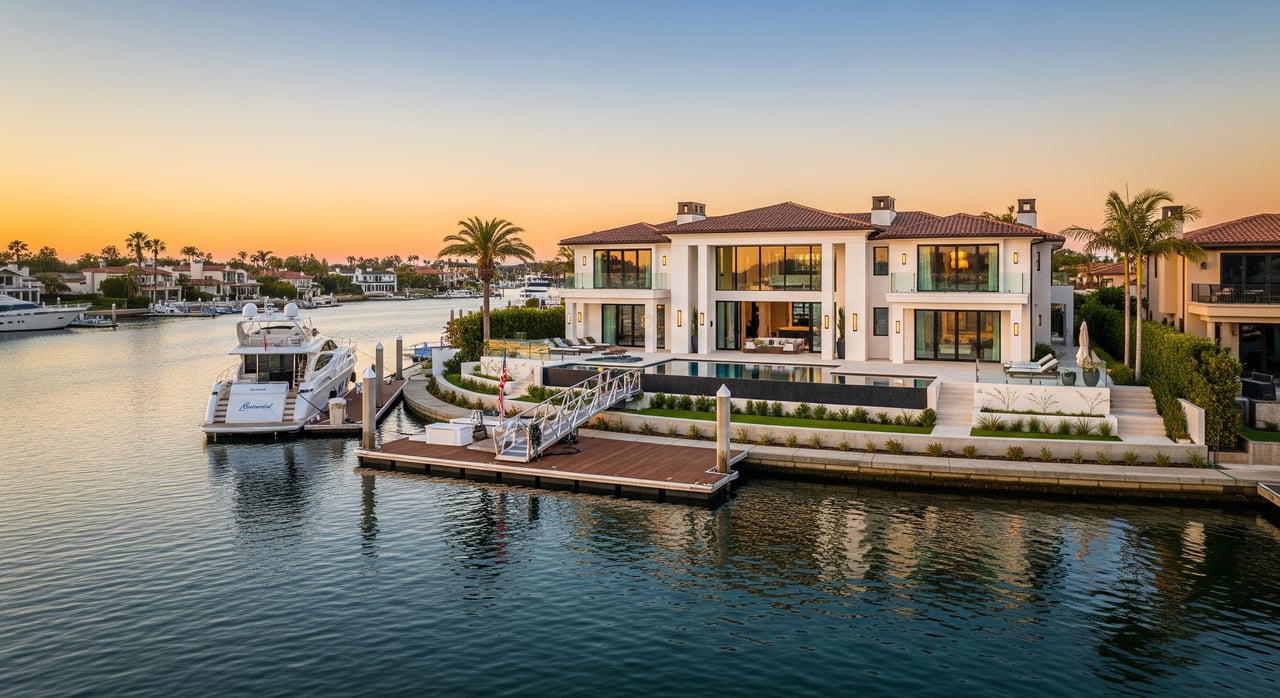
Pricing a Newport Beach waterfront home is not the same as pricing a typical house across town. Every block, view line, and dock configuration can shift value by six figures or more. If you want to sell with confidence, you need a plan that blends data, on‑the‑water insight, and precise positioning.
In this guide, you’ll learn how Newport Beach’s micro‑markets work, which features add the most value, how to build a credible price using local comps, and which risks and costs can move buyer demand. You’ll also get practical steps that help you launch at the right number. Let’s dive in.
Why waterfront pricing is different
Waterfront homes trade in lower numbers, and each one is unique. That makes comparable sales harder to find and forces you to weigh qualitative details like view corridors and dock rights alongside square footage.
Premiums vary by frontage type and micro‑location. Oceanfront often commands the highest premium for direct sand access and unobstructed views, while bayfront, canal, and bluff properties price differently based on water access and outlook.
Market liquidity is thinner, so a single notable sale can move local averages. Before you price, you should always review the most recent closed and pending sales, active inventory, and days on market trends within your exact waterfront sub‑area.
Map the micro‑markets
Newport Beach waterfront is a collection of distinct sub‑markets. Knowing where your home fits is the first step to a smart price.
Oceanfront
Stretches near Big Corona, the Newport Pier area, and oceanfront streets carry strong premiums for direct beach access and wide, west‑facing ocean views. Private beach stairs increase desirability.
Bayfront and harbor
Balboa Peninsula, Balboa Island, Lido Isle, and homes along Newport Harbor channels attract buyers who value boating and bay views. Pricing is influenced by dock capacity, depth, and proximity to main channels.
Canal front
Canal properties on Balboa Island and throughout the harbor offer private docks and more intimate water frontage. Dock size, usability, and setback rules shape value.
Bluffs and coastal cliffs
Corona del Mar and parts of Newport Coast feature bluff‑top properties with commanding ocean views. You gain view and elevation, with or without direct sand access.
Newport Coast enclaves
Gated, amenity‑rich communities near Pelican Hill and surrounding areas combine ocean views, newer construction, and resort‑style living. Topography and architectural quality drive pricing.
Know the value drivers
Value on the water is less about bedroom counts and more about precise attributes of the lot and improvements. Pay special attention to:
- Frontage type and quality. Ocean, bay, or canal frontage each price differently. Direct sand access and private stairs are premium features.
- Dock and boat facilities. A permitted, transferable private dock that fits a desired boat size adds significant value. Usability depends on depth, width, and Harbor Department rules.
- View lines and orientation. Unobstructed, wide ocean views often command the highest premiums. Sunrise or sunset orientation can also matter to buyers.
- Elevation and coastal protection. Elevation above mean sea level, seawall condition, and proximity to high‑tide zones affect risk, insurance, and buyer comfort.
- Structural condition and renovations. Updated kitchens and baths, sound foundations or pilings, and recent coastal improvements all support higher pricing.
- Lot width and front feet. On beachfront parcels, linear front feet can be a benchmark for value in addition to home size.
- Access and parking. Private garages, alley access, and local parking restrictions influence utility and day‑to‑day convenience.
- Regulatory environment. Coastal development rules, HOA and CC&R limitations, and permit history for docks and seawalls all affect marketability.
Pricing methods that work
You have several tools to triangulate the right price. The key is choosing the ones that fit your property and micro‑market.
- Comparative Market Analysis. Start with the most recent, most similar closed sales, then adjust for frontage type, view quality, dock rights, lot width, condition, and permits.
- Price per linear front foot. Useful on true oceanfront within the same stretch of beach. Use with caution and only with very close comparables.
- Price per square foot. Helpful when there are several similar homes, but less reliable for heterogeneous waterfront properties where land and water access dominate value.
- Income approach. If a property has significant short‑term rental potential or operates like an investment, investor buyers may consider income‑based metrics.
- Replacement cost. A secondary lens that can set a floor for new construction or highly customized estates.
Build a credible CMA in Newport Beach
To avoid mispricing, follow a step‑by‑step process that reflects local conditions.
- Define the exact sub‑market. Pinpoint the frontage type and micro‑location, such as Balboa Island canal front or a Corona del Mar bluff.
- Pull recent closed sales. Target the last 6 to 12 months within your micro‑market. If comps are sparse, expand carefully and note limitations.
- Review actives and pendings. Active and in‑escrow listings reveal current competition and buyer appetite.
- Compare key attributes. Frontage type, front feet, lot size, home square footage, bed and bath count, dock rights, view quality, condition, permits for coastal improvements, and parking.
- Apply documented adjustments. For example, a permitted private dock for a larger vessel, an unobstructed ocean view, or recent seawall work may justify a premium. Lack of permits or a compromised seawall may require a downward adjustment.
- Filter non‑standard sales. Identify distressed transfers, off‑market trades, or family transactions and adjust or exclude as appropriate.
- Select your list strategy. Decide on aggressive, market, or value‑entry pricing based on inventory, seasonality, days on market, and your timeline.
Factor risks, costs, and disclosures
Certain ownership factors directly impact price and demand. Address them before you list.
- Flood, erosion, and sea‑level exposure. Flood zone status, elevation, and past events influence insurance costs and buyer comfort. Expect savvy buyers to analyze this closely.
- Seawalls and shoreline permits. A failing or unpermitted seawall is a material issue and can be costly to remedy. Replacement or modification typically requires approvals under coastal rules.
- Harbor and dock encumbrances. Dock rights can be separate from the parcel, with easements or Harbor Department conditions. Confirm permitted use and transferability early.
- Insurance availability and cost. Flood and coastal insurance options and premiums can shape affordability and buyer interest.
- Taxes and carrying costs. Assessed value and any special assessments factor into ownership. Sellers should consult tax professionals on potential capital gains.
- Disclosure obligations. California requires robust natural hazard and material defect disclosures. Include flood zone status, shoreline work, permits, and any known issues.
Set your list price strategy
You have three common strategies. Choose the one that aligns with your goals and the current market posture.
- Market price. List near fair market value to secure a timely sale with strong, qualified showings.
- Aggressive price. List high when inventory is thin and your property’s features justify it. Expect a longer marketing cycle.
- Value‑entry price. List slightly below market to spur multiple offers. This can be risky for unique trophy properties where the buyer pool is selective.
Match strategy to active competition, the pace of recent nearby sales, and your timeline. Review your position every 2 to 3 weeks and adjust if traffic and offers do not align with expectations.
Timing, prep, and marketing that lift price
Seasonality matters, but presentation matters more. Warmer months and holiday‑adjacent windows can increase showings from out‑of‑area buyers. Aim to launch when your property is at its best.
Preparation that moves the needle:
- Commission specialty inspections. Obtain reports for seawalls, docks, foundation or pilings, and roof systems so buyers have clarity.
- Tackle key updates. Address deferred maintenance and consider strategic kitchen or bath refreshes if the return is favorable.
- Assemble documentation. Organize permits, dock rights, recent repairs, elevation certificates, and insurance claim histories.
- Invest in visuals. Use professional photography, drone imagery, twilight shots, and compelling video or virtual tours that showcase views and water access.
Marketing points that matter:
- Feature high‑value attributes. Lead with legal dock capacity, view quality, direct beach access, and recent structural or coastal upgrades.
- Target the right buyers. Focus on boat owners, second‑home seekers, and relocation clients through curated networks and luxury channels.
- Choose exposure thoughtfully. Private marketing can protect discretion, but broader exposure often drives stronger competition and price.
What buyers will verify
Expect experienced buyers and their advisors to validate the details that support your price:
- Flood zone and elevation certificates, plus expected insurance costs
- Structural, seawall, and dock condition via specialized inspections
- Dock permits, transferability, and Harbor Department requirements
- Recent and pending coastal permits or compliance items
- A valuation opinion from a coastal appraiser with Newport Beach experience
When to bring in specialists
The best pricing decisions are made with expert inputs. Consider engaging:
- A coastal appraiser who understands front feet, view adjustments, and dock rights
- A structural or coastal engineer for seawall and foundation assessments
- The Harbor Department for current dock and mooring rules
- An insurance broker who can outline flood and coastal coverage options
If you want a confidential, data‑driven valuation and a marketing plan calibrated to your micro‑market, the Charlie Price Group can help you price precisely, present beautifully, and reach qualified buyers on a local‑to‑global stage.
FAQs
How do I estimate the premium for oceanfront in Newport Beach?
- Premiums vary by exact beach stretch, view width, and beach access. Use recent oceanfront sales on the same or adjacent blocks and adjust for front feet, view, private stairs, and condition.
Do permitted private docks always add value on bayfront homes?
- A permitted, transferable dock sized for the target vessel typically adds significant value. Limited depth, size restrictions, or non‑transferable rights can reduce or negate that premium.
How much should I adjust for unobstructed ocean views vs partial views?
- View adjustments are case‑specific. Unobstructed, wide ocean views often command some of the largest premiums in the market. Anchor your adjustment to the closest closed comps with similar views.
How do seawalls impact my sale price and timeline?
- A sound, permitted seawall supports value and buyer confidence. A failing or unpermitted seawall introduces cost and permitting uncertainty that can lower offers and extend timelines.
What disclosures do Newport Beach waterfront sellers need to provide?
- Expect to disclose natural hazards, flood zone status, known material defects, shoreline or coastal permits, seawall or dock work, and any pending compliance issues under California requirements.
When is price per front foot useful on the beach?
- Use front‑foot metrics when your lot sits along a comparable stretch of oceanfront with multiple recent sales. Always cross‑check with a full CMA and qualitative adjustments.
What is the best time of year to list a waterfront home?
- Buyers shop year‑round, but spring, summer, and early fall often offer better presentation and travel patterns. Launch when inspections, visuals, and documentation are complete for maximum impact.