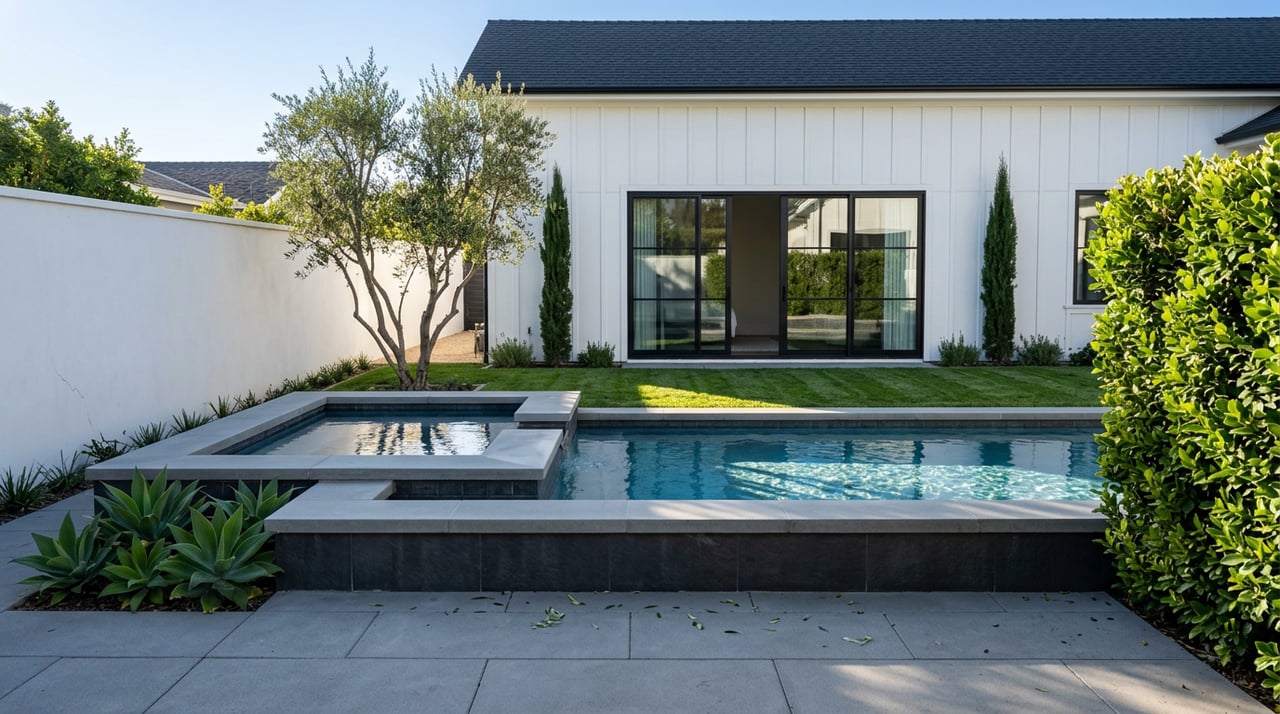
For nearly the entire history of the California Coastal Act, a Newport Beach homeowner could win local approval for a remodel, watch a neighbor or a Commissioner file an appeal, and then wait.
As Ironside Building reported, Governor Newsom signed Senate Bill 963 on July 16, 2026. The post-appeal de novo process has statutory deadlines for moving to a final decision. If you are buying, selling, or renovating anywhere in Newport Beach's coastal zone, which is to say almost anywhere in Newport Beach, this is the kind of change that belongs in your due diligence file before it shows up as a surprise in escrow.
The Permit Most Buyers Never Think to Ask About
According to Stone Development, nearly every parcel in Newport Beach sits inside California's legally defined Coastal Zone.
That track already runs long before anyone appeals anything. Interior remodels in Newport Beach commonly move in six to ten weeks. Exterior work and additions that require a Coastal Development Permit run fourteen to twenty-eight weeks once coastal review is included. Waterfront projects that also need a Harbor Permit for a dock, bulkhead, or structure near the water can push past thirty weeks before construction even starts, because those touch not just the city and the Coastal Commission but potentially the California State Lands Commission and the U.S. Army Corps of Engineers as well.
None of that accounts for what happens if someone appeals.
Forty-Nine Days to Decide Whether to Decide
Once the city issues its final local action on a coastal permit, anyone with standing has a ten-working-day window to appeal to the California Coastal Commission. If an appeal is filed, the Commission is required to hold a hearing within forty-nine working days to decide a single narrow question: does this appeal raise a "substantial issue" under the Coastal Act and the city's Local Coastal Program?
One detail of the existing appeal process is relevant to Newport Beach sellers. Under existing Commission rules, any two commissioners can appeal a local approval to the full Commission themselves, regardless of whether they participated in the local hearing. An analysis by the Pacific Legal Foundation found that the Commission finds a substantial issue in fewer than half of appeals filed by non-commissioners, but almost always finds one when commissioners appeal to themselves. Across Commission meetings from 2020 through 2024, staff recommended a finding of substantial issue in 109 appeals overall, and in 108 of those, or 99 percent, the Commission automatically concurred without hearing testimony or discussion at all.
Those figures describe substantial-issue findings.
What SB 963 Actually Changes
Authored by State Senator John Laird and passed by the Legislature without opposition, SB 963 sets statutory deadlines for the post-appeal process.
| Stage | Timing |
|---|---|
| Substantial issue hearing | Within 49 working days of filing |
| Additional information request | The California State Senate says the Commission must provide a complete list within 30 days of finding a substantial issue. |
| Applicant's information review | Commission has 30 days to review submitted materials |
| Final de novo decision | Hearing and final decision required within 180 days of receiving all requested information |
The table lists up to 240 days of Commission deadlines across those stages; the 180-day final-decision period begins only after the Commission receives all requested information. Supporters ranged from the California Coastal Protection Network to pro-housing advocacy groups, an unusual alignment that reflects how broadly the old open-ended appeal process frustrated homeowners, builders, and coastal advocates alike.
Why Newport Beach Feels This More Than Most Cities
Coastal review is not unique to Newport Beach, but the concentration of waterfront parcels here means more projects trigger it, and more of those projects sit at the higher end of the timeline where an appeal becomes a real possibility rather than a theoretical one. A second-story addition in Corona del Mar Village, a new pool deck on Balboa Island, a bulkhead replacement on Lido Isle: each of these touches the coastal overlay differently, and the rules genuinely do vary by neighborhood within the same city.
The city's own capital projects have run this same gauntlet. The Balboa Island seawall-capping project, which raised the effective height of the island's aging seawalls to cut down on overtopping during high tides, moved through the same Local Coastal Program review that governs a private homeowner's remodel. So did the Collins Island bridge rebuild, approved by city leadership with higher seawalls as part of the city's broader planning for future water levels. If Newport Beach's own engineers and planners are working inside this permitting structure to protect public infrastructure, there is no reason to assume a private waterfront remodel gets an easier path.
What This Means Before You Write an Offer, or Sign a Listing Agreement
For a buyer looking at a home with recent exterior work, permit history is no longer a background check item. Ask specifically whether the property's Coastal Development Permit has cleared its ten-working-day appeal window, or whether it is still inside it. If an appeal was filed, ask where in the process it currently sits: still waiting on the forty-nine-day substantial issue hearing, or already past that point and now moving through the new thirty-thirty-one-eighty framework. A project that was in indefinite limbo two years ago now has statutory deadlines for key steps in the de novo process, giving you more information to plan a purchase around.
For a seller mid-remodel, the calculus around listing timing has shifted too. If your addition or waterfront feature has an open or appealed CDP, disclosing exactly where it stands in the new timeline gives a buyer's lender and insurer something concrete to underwrite against, instead of an open-ended question mark. That clarity can be the difference between a buyer walking away and a buyer writing a contingency they're comfortable with.
Frequently Asked Questions
Does SB 963 apply to every Newport Beach coastal permit, or just ones that get appealed? Only to the appeal stage. The new deadlines apply once an appeal has been filed and the Commission has found a substantial issue.
If I want to finish a remodel before I list, does this law shorten my total timeline? Not directly. It sets deadlines for the de novo stage specifically. The standard fourteen-to-twenty-eight-week window for exterior CDP work, and the longer timeline for waterfront projects requiring a Harbor Permit, still applies regardless of whether an appeal ever happens.
Where can I check whether a Newport Beach property's permit history includes a Coastal Commission appeal? Start with the City of Newport Beach's Building Division for local permit and inspection records, and the California Coastal Commission's public appeal filings for anything that escalated beyond the city level.
Coastal permitting in Newport Beach was never simple, and SB 963 does not make it simple either. What it does is put statutory deadlines on key steps in the appeal process, and in a market where escrow timelines and buyer confidence both hinge on predictability, that is worth understanding before you're the one waiting on a decision with no date attached. If you're weighing a purchase, sale, or remodel timeline anywhere in Newport Beach's coastal zone, Charlie Price Group can walk through what a specific property's permit history means for your plans and help you build a strategy around it from day one.
This article is general information, not legal, tax or financial advice. Consult a qualified professional about your situation.